Eco and Outdoor Learning
Colby Primary School is located in a rural, agriculturally rich part of North Norfolk and, as such, its children are acutely aware of the environment around them and issues to do with the countryside and wildlife. The school prides itself on the level of environmental learning at all ages and throughout the curriculum. We prioritise time spent with a stimulating and quality environment, and this often means time spent outside the classroom in specially adapted outdoor space for learning.
The eco work carried out at Colby school is innovative, forward-looking and vital for the current generation of young children who will face ever more challenging environmental issues in the future.
At Colby School we aim to provide children with opportunities for outdoor play which promotes the development of confidence, co-ordination, well being and strength, through real life first-hand experiences and reasonable risk taking.
Objectives:
- To provide a safe and supportive outdoor environment, which encourages children to participate in physical activities providing adventure, personal challenge and enjoyment.
- To promote social skills such as sharing, turn taking, decision making, co-operation with others, negotiation and fairness.
- To encourage creativity through using the senses to discover natural materials: encouraging deeper understandings and appreciation of nature.
- To promote enjoyment of the natural environment, including gardening and landscaping.
- To offer time and space for repetition and elaboration on early patterns of activity for children to modify and extend their own learning.
At Colby School we believe that:
- Outdoor play is central to young children’s learning.
- Indoors and outdoors is viewed as one combined and integrated environment.
- Outdoors receives planning, management, evaluation, resourcing, staffing, and adult interaction on a par with indoors.
- Outdoors is both a teaching and learning environment.
- Outdoor design and layout is given careful consideration.
- The outdoor learning area offers children the opportunity to use effective styles of learning – playing, movement and sensory experience.
- Children should be given a wide range of open-ended equipment and environments.
- Children should be able to control, change and modify their environment.
- Staff time is organised to support children’s learning over time.
Emphasis will be placed on using the outdoor environment as a valuable resource to stimulate and challenge the children as they play and learn. There will be opportunities for the children to enjoy fresh air and develop awareness of seasonal weather changes.
Research into how the brain works and theories about different learning styles provides convincing evidence of the benefits of developing carefully structured outdoor learning experiences.
The freedom and space of the outdoor environment will afford opportunities for:
- Imaginative play.
- Development of spatial awareness.
- Building skills of control and co-ordination within gross and fine motor activities.
- Becoming aware of personal safety and the safety of others.
- Learning to co-operate with others in active play, games and in social play.
- Taking time to sit and observe others at play.
Staff will consider how best to encourage and support more timid children towards gaining confidence to participate. By observing the children at play they will also work to develop strategies for channelling the energies of more boisterous children.
Eco Council
There are wide range of special events in the Colby School diary, marking and celebrating the seasons, local traditions and national events. As well as the traditional Christmas, Easter and Harvest celebrations, we also hold a Remembrance Service, Sports Week, Eco Week, and Science Week. We mark Handwriting Day, Superhero and Inspirational People Day and World Book Day with activities and dressing up, as well as an annual Christmas Fun Run.
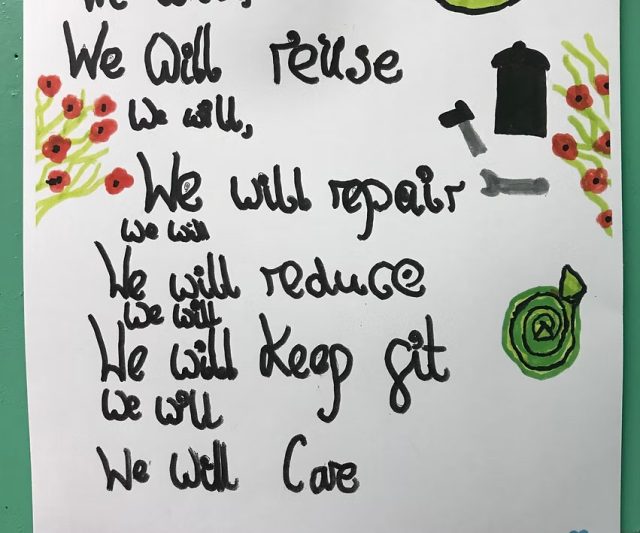
Eco Code
Our aim is to help the environment by recycling-reducing-reusing.
We believe we should:
- Help younger children to understand about eco
- Encourage everyone else to do what we do at school
- Make food waste useful
- Recycle as much as possible
- Save electricity and water
- Use outside areas as much as possible
- Think about wild animals in our garden
- Encourage people to travel eco-friendly
- Regularly pick litter and remind everyone not to drop litter
Garden and Plants
Colby School has a large garden where each class has its own raised bed in which they grow flowers and/or fruit and vegetables. There is an outdoor classroom, a polytunnel, willow dome, lots of fruit trees, pond area and herb garden. Harvested produce is sold at the Farmers’ Market or in the playground after school.
Friends of Colby School funded and built a willow dome in the garden where children can play and learn in the shade.
There is a small pond in the garden which attracts a variety of different frogs, toads and newts, insects and other wildlife, and is used for outdoor learning.
The school has a large compost area in the garden where leftover fruit, vegetables and animal bedding are made into compost.
The large playing field attached to the school has a wide variety of trees, mixed species hedgerows, and also incorporates a bee and butterfly garden and a woodland area.
The herb garden is located in the school playground and this allows the children to sit and smell and handle the herbs during break times. We have planted a range of herbs including different types of mint, sage, thyme, lavender, lemon balm, chives, basil, hyssop and rosemary.
Pets and Wildlife
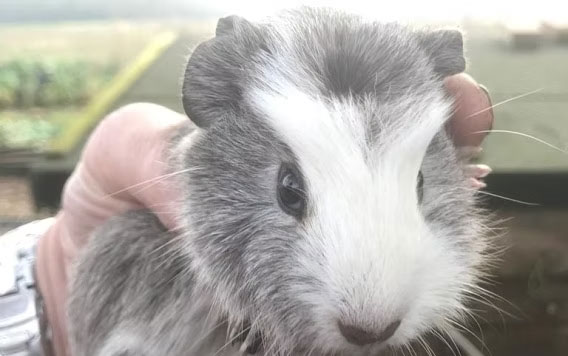
At Colby, children develop an understanding of, and empathy with wildlife around the school garden, pond area and wider grounds. The pupils also learn to look after and nurture the school pets that live in the garden and classrooms. The school has a variety of pets including guinea pigs, gerbils, fish and chickens.
The children are taught to respect and look after wildlife and wild birds in the school grounds. Food is put out for the birds in winter and the children also carry out a yearly census of bird species that visit the garden. Nesting boxes, log stacks and a bug hotel are also provided.
Litter
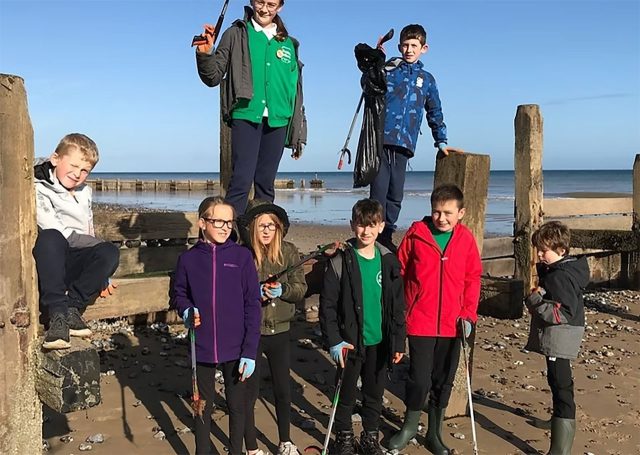
The children of Colby School are committed to their ethos to reduce, reuse and recycle as much as possible. They understand that it is their responsibility to make sure the school grounds and surrounding areas are tidy and free of litter. Regular litter picks are made around the school and car park. During the school’s annual Eco Week, children collect litter near their homes as part of a ‘Love where you live’ campaign, and sometimes meet in groups at local parks and beaches to ‘clean up’ and raise awareness of littering.
Eco Council have made a committment to improve the school grounds – keep everywhere tidy and litter free, repair things that are broken and replace as much plastic as possible around the school (e.g. plastic planters, toys, garden equipment) with more environmentally sustainable items. Any new items bought for the garden will be made from natural, sustainable resources or recycled materials.
Recycling
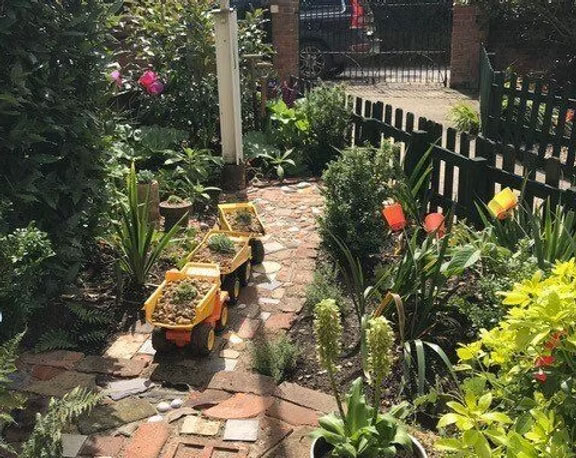
The children of Colby School are passionate about recycling and, within school, have schemes that collect and recycle paper and card, writing instruments, batteries, crisp packets and, through the Colby Scrapbox initiative, collect materials for arts and crafts projects (such as lollipop sticks, buttons, beads, ribbon, wool, corks, tissue paper, cardboard tubes, plastic lids and bottle tops). Eco Council hold regular book swaps and, in conjunction with Friends of Colby School, hold a Bags2school textile recycling event twice a year. Second hand toys, games, books and clothes are also sold at the Christmas and Summer Fairs. In the school garden, items are recycled or re-purposed as much as possible to create planters, play equipment and habitats for wildlife. In 2020, an entire garden was created at the front entrance to the school from recycled materials.